- Back Pain Treatment
- Neck Pain Treatment
- Knee Pain Treatment
- Sciatica/Slip Disc Pain Treatment
- Facial Pain Treatment
- Headache Treatment
- Shoulder Pain Treatment
- Cancer Pain Treatment
- Diabetic Neuropathy Treatment
- Post-Herpetic Neuralgia Treatment
- Wrist Pain Treatment
- Nerve Pain Treatment
- Fibromyalgia Treatment
- CRPS Pain Treatment
- Trigeminal Neuralgia Treatment
- Myofascial Pain / Muscle Pain Treatment
- Chronic Pelvic Pain Treatment
Interventional Pain Management: A Patient-Friendly Guide to Long-Lasting Pain Relief
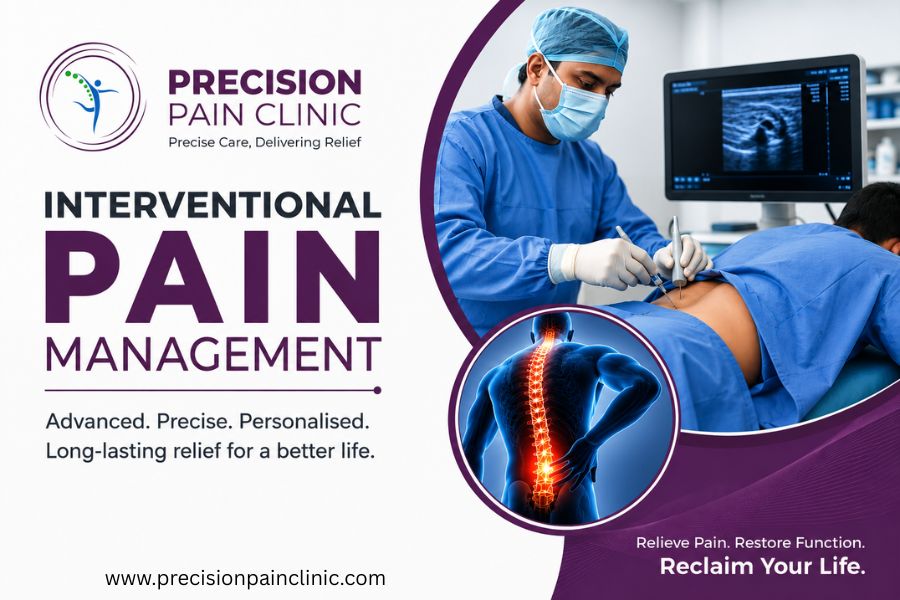
Living with pain for weeks, months, or years can affect your sleep, movement, work, mood, and overall quality of life. Interventional Pain Management is a specialised branch of medicine that focuses on finding the source of pain and treating it with targeted, minimally invasive, non-surgical procedures.
What Is Interventional Pain Management?
Interventional Pain Management uses precise treatments such as spine injections, nerve blocks, joint injections, and radiofrequency ablation to reduce pain signals from the affected area. These procedures are usually recommended when pain does not improve enough with medicines, rest, exercise, or physiotherapy.
Common Conditions Treated
- Low back pain
- Sciatica or slipped disc pain
- Neck pain and cervical spondylosis
- Joint pain, including knee, shoulder, and hip pain
- Muscle pain and trigger points
- Nerve pain
- Cancer-related pain
What Procedures May Be Used?
Your pain specialist will choose the most suitable procedure after understanding your symptoms, examination findings, and scan reports. Common interventional pain procedures include epidural injections for spine-related nerve pain, facet joint injections for spine joint pain, nerve blocks to calm irritated nerves, radiofrequency ablation to interrupt pain signals, joint injections, and regenerative therapies for selected muscle, tendon, or joint problems.
How Are These Procedures Performed?
Most procedures are done by a trained pain physician in a well-equipped operation theatre or procedure room. The doctor uses image guidance such as ultrasound or fluoroscopy, which is a live X-ray, to place the injection accurately at the source of pain. This helps improve safety, protect nearby healthy tissues, and reduce the chance of side effects.
Will I Need Surgery?
Not always. Many interventional pain procedures are designed to provide relief without open surgery. They are usually performed through small needles and often as day-care procedures, so many patients can return home the same day. Your doctor will explain whether this approach is appropriate for your condition.
A Complete Pain Care Plan
Interventional procedures work best when they are part of a complete pain management plan. This may include specific medicines, physiotherapy, posture correction, strengthening exercises, weight management, sleep improvement, and lifestyle changes. The aim is not only to reduce pain, but also to help you move better and return to daily activities with more confidence.
When Should You See a Pain Specialist?
You should consider consulting a pain specialist if your pain has lasted for more than a few weeks, keeps coming back, affects your walking or sleep, causes tingling or numbness, or has not improved with usual treatment. Early evaluation can help identify the cause and prevent pain from becoming more difficult to treat.
Take the First Step Towards Relief
If chronic pain is limiting your life, help is available. To know more about personalised, non-surgical pain relief options, contact Precision Pain Clinic, Baner, Pune today.