
- Back Pain Treatment
- Neck Pain Treatment
- Knee Pain Treatment
- Sciatica/Slip Disc Pain Treatment
- Facial Pain Treatment
- Headache Treatment
- Shoulder Pain Treatment
- Cancer Pain Treatment
- Diabetic Neuropathy Treatment
- Post-Herpetic Neuralgia Treatment
- Wrist Pain Treatment
- Nerve Pain Treatment
- Fibromyalgia Treatment
- CRPS Pain Treatment
- Trigeminal Neuralgia Treatment
- Myofascial Pain / Muscle Pain Treatment
- Chronic Pelvic Pain Treatment
Why Does Back Pain Worsen with Prolonged Sitting?
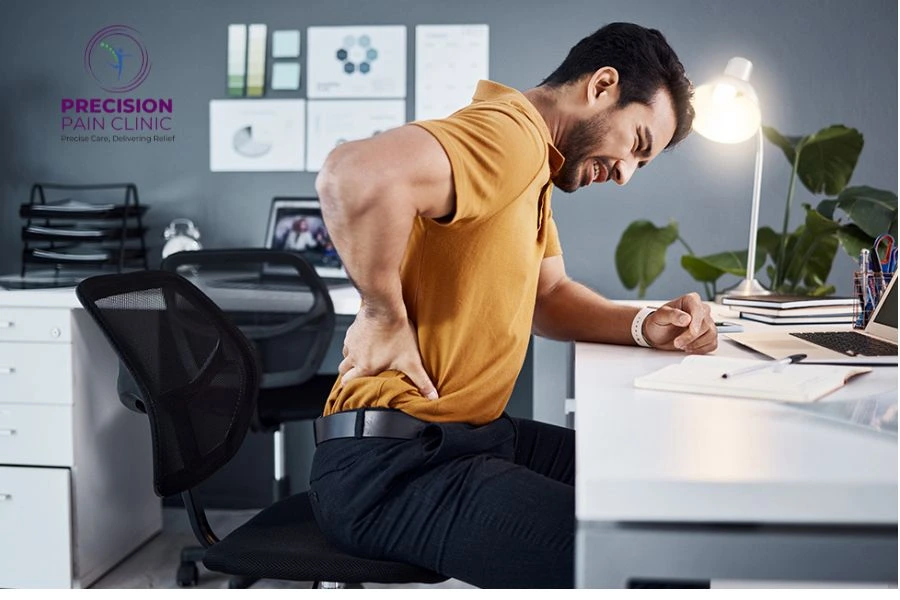
Back pain is one of the most common complaints in today’s sedentary lifestyle. If you’ve noticed your back pain getting worse after sitting for long hours-whether at work, while driving, or using your phone-you’re not alone. But why does this happen?
Let’s break it down.
The Role of Intervertebral Discs
The most common source of back pain is the intervertebral discs-the cushion-like structures located between the bones of your spine (vertebrae).
These discs act as shock absorbers, allowing flexibility and movement while protecting your spine from impact.
Why Sitting Affects Your Discs
Unlike most tissues in the body, intervertebral discs do not have a direct blood supply. Instead, they depend on a process called diffusion to receive nutrients like oxygen and water.
What is Diffusion?
- Diffusion is a process where nutrients move into the discs through pressure changes caused by movement
- When you move, your spine creates a mechanical pumping effect, allowing the discs to stay nourished and healthy
What Happens When You Sit Too Long?
Prolonged sitting disrupts this natural process and leads to several problems:
1. Reduced Nutrient Supply
- Sitting for long periods limits movement
- This prevents proper diffusion
- As a result, discs become dehydrated and undernourished
2. Increased Pressure on the Spine
- Sitting puts more pressure on the discs than standing
- This pressure can cause the soft inner part of the disc to bulge outward
3. Risk of Slip Disc and Sciatica
- A bulging disc may press on nearby nerves
- This can lead to:
- Slip disc (herniation)
- Sciatica (radiating leg pain)
4. Weakening of Core Muscles
- Prolonged sitting reduces core muscle activity
- Weak core muscles shift more load onto the spine
- This increases the risk of chronic pain and stiffness
The Bigger Picture: Why Pain Becomes Chronic
When these factors combine-poor nutrition of discs, increased pressure, and weak muscular support-they create a cycle that leads to:
- Persistent lower back pain
- Stiffness
- Reduced mobility
- Increased risk of long-term spinal issues
What Can You Do?
At Precision Pain Clinic, we emphasise movement as medicine. Simple changes can make a big difference:
- Take breaks every 30–45 minutes
- Stand, stretch, or walk briefly
- Maintain proper sitting posture
- Strengthen your core muscles
- Use ergonomic chairs and workstations
When Should You Seek Help?
If your back pain:
- Persists despite rest
- Radiates to your legs
- Is associated with numbness or weakness
…it’s important to consult a specialist early to prevent further complications.
Final Thoughts
Your spine is designed for movement-not prolonged sitting. Understanding how your body works is the first step toward preventing and managing back pain effectively.
Need personalised care?
At Precision Pain Clinic, we specialise in non-surgical, evidence-based treatments to help you get back to a pain-free life.